Data Stories
Urban & Rural

What our urban and rural communities tell us about the health of our state
When we set out to survey residents of Missouri for Speak Up MO 2025, we wanted to be able to tell a range of stories. We knew that if we wanted to represent the communities of Missouri faithfully, we needed to be able to access the perspectives of folks from all walks of life – including Missourians from communities of all kinds. Sometimes, urban and rural priorities are posed as oppositional, but we wanted to know the real story of how location impacts residents’ perspectives. Read on to learn more about what we learned from urban and rural communities across Missouri.

Rural and urban populations in Missouri differ demographically
When we surveyed residents of Missouri, 774 respondents identified themselves as coming from rural communities. Another 406 identified themselves as coming from urban communities. There were some notable differences between these respondent pools.
Being a part of a community is, to me, different than just living somewhere. Being a part of a community where you’re able to know each other, have some supports, maybe know your neighbors, have some local businesses that you frequent or that they know you, having, maybe, some groups that you’re a part of or that you participate in, to me, that becomes your community.
Urban residents were less likely to be white, with as many as 87% of rural residents identifying as white while only 64% of urban residents did so. Urban residents skewed younger than their counterparts in rural communities, and tended to be slightly more educated – a full 19% of urban residents had graduate degrees and 36% had completed an associate’s or bachelor’s degree, compared to 10% of rural residents with graduate degrees and 34% with associate’s or bachelor’s degrees.
Ultimately, Missourians feel good about the state. We found that a large margin of both rural and urban residents would recommend Missouri to a friend or family as a place to live. Almost half of urban residents – 47% – and well over half of rural residents – 60% – would unreservedly recommend the state to others.


Rural and urban residents of Missouri share deep values
At strikingly similar rates, rural and urban residents of Missouri describe the same three factors as critical to making a community healthy: “having good jobs – with benefits, fair wages, opportunities for growth, and meaningful work;” “high-quality public schools and libraries that are accessible to all;” and “treating people of all racial, ethnic, and religious income groups with respect.”
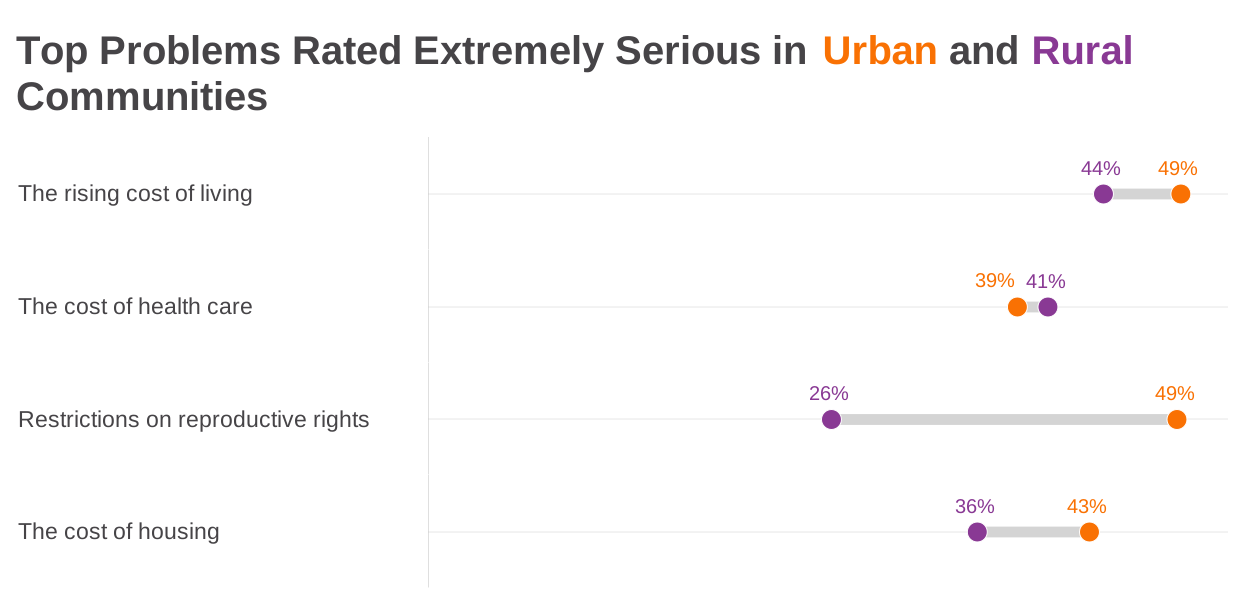
Rural and urban Missourians we surveyed had differing perspectives on the problems facing Missouri. For rural Missouri residents we surveyed, the rising cost of living, the cost of housing, and the cost of health care rated as the most serious issues, with at least 87% of respondents identifying these as “extremely,” “very,” or “somewhat” serious problems. A lack of well-paid jobs with benefits and drug and alcohol use were also seen as serious problems in rural Missouri. For urban Missourians, the high costs of health care, the rising cost of living, and the cost of housing were certainly significant problems, but restrictions on reproductive rights and homelessness were also big concerns for these residents.
Missouri residents from urban and rural communities are in agreement that their own communities are welcoming and good places to raise kids. Rural residents, however, were more likely than urban residents to characterize their communities as safe, with 88% saying “safe” described their communities very well or somewhat well compared to 65% of urban residents. And urban residents were much more likely to characterize their communities as diverse, with 71% of urban residents choosing this descriptor, compared to 42% of rural residents.
Urban and rural residents feel a similar sense of belonging
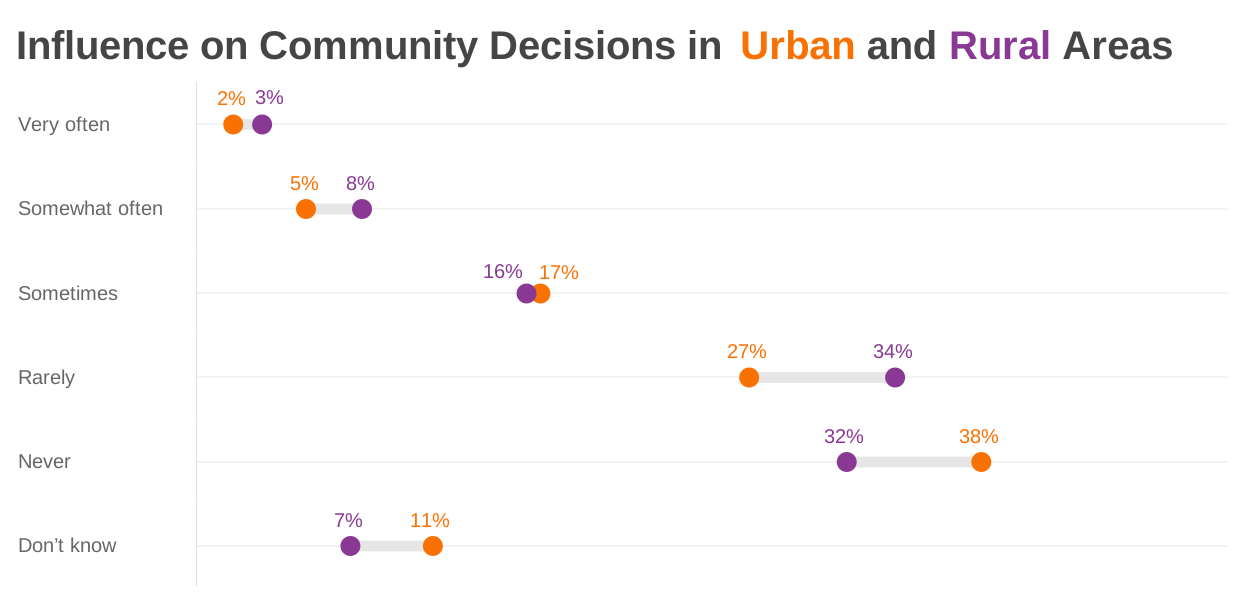
At roughly similar rates, urban and rural residents of Missouri report that they feel a sense of belonging: 30% of urban residents and 24% of rural residents say they strongly agree that when interacting with people in their communities, they feel like they truly belong. Urban residents and rural residents are equally likely to strongly agree that they feel welcomed and included in their communities, even though urban residents are a bit less likely to feel they can influence their local leaders than their rural counterparts are.
It might just be me, but I feel like I belong anywhere I decide to go and can’t nobody stop me from being there. I don’t have to take my way in, just go. You can go anywhere in this world that you want to go, and you can feel like you want to belong there. It’s not up to nobody else.
Rural and urban residents participate in different community activities
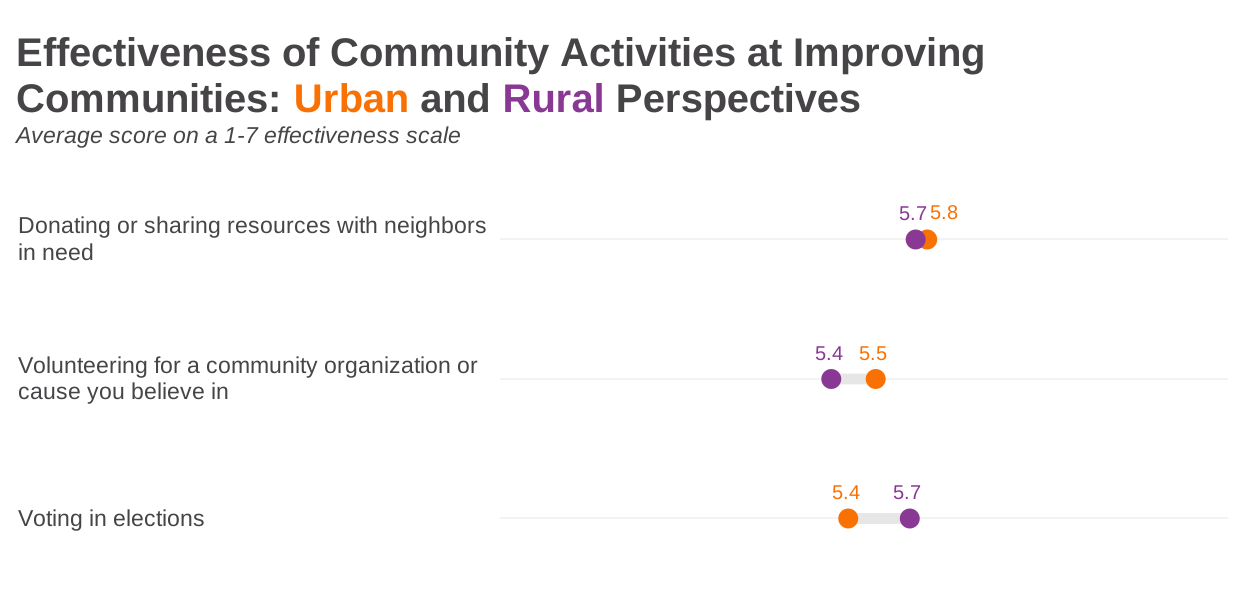
Urban residents are more likely to report that they volunteer than their rural counterparts; in rural communities, community involvement is more likely to involve participation in a church community than volunteering. Of Missourians we surveyed, 42% of rural residents and 33% of urban residents report that they are involved in a faith community, whereas 35% of urban residents and 30% of rural residents report that they volunteer.
In our survey, many residents reported that they do not have a strong influence on community leaders. Despite this, 80% of urban residents and 50% of rural residents who feel this way reported that they participated in community-improving activities “very often.” Urban and rural Missourians also reported similar barriers to community participation. For both groups, a lack of time is the likeliest explanation for a lack of participation, and conversely, having more time or availability could encourage them to participate in activities aimed at improving their communities more.

Rural and urban residents struggle financially at similar rates
Among those surveyed, 8% of rural residents, and 5% of urban residents, have faced eviction or loss of housing in the last year. Among urban residents, 23% lacked health coverage for themselves or someone in their household at some point in the last year, and 26% have been unable to afford enough food at some point in the last year. Rural residents experienced food scarcity at a rate of 30% and 28% lacked health coverage for themselves or a member of their household at some point during the last year. We found that 16% of urban residents and 15% of rural residents experienced unemployment of themselves or a household member in the last year.
We grew up pretty poor. The amount of stress as a younger teenager that I felt knowing what our situation was and being on government assistance as a kid, and having to wait for that certain time of the month for things to come in so we could have what we needed, was really just a lot. So I absolutely think that financial security contributes to physical health because of anxiety and stress.
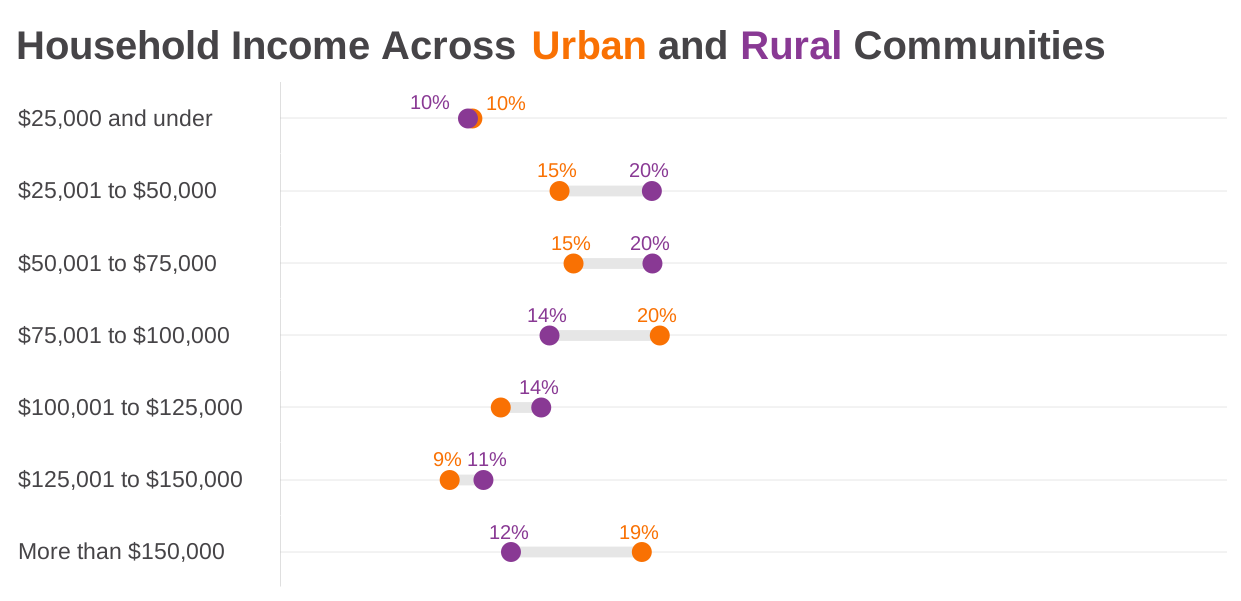
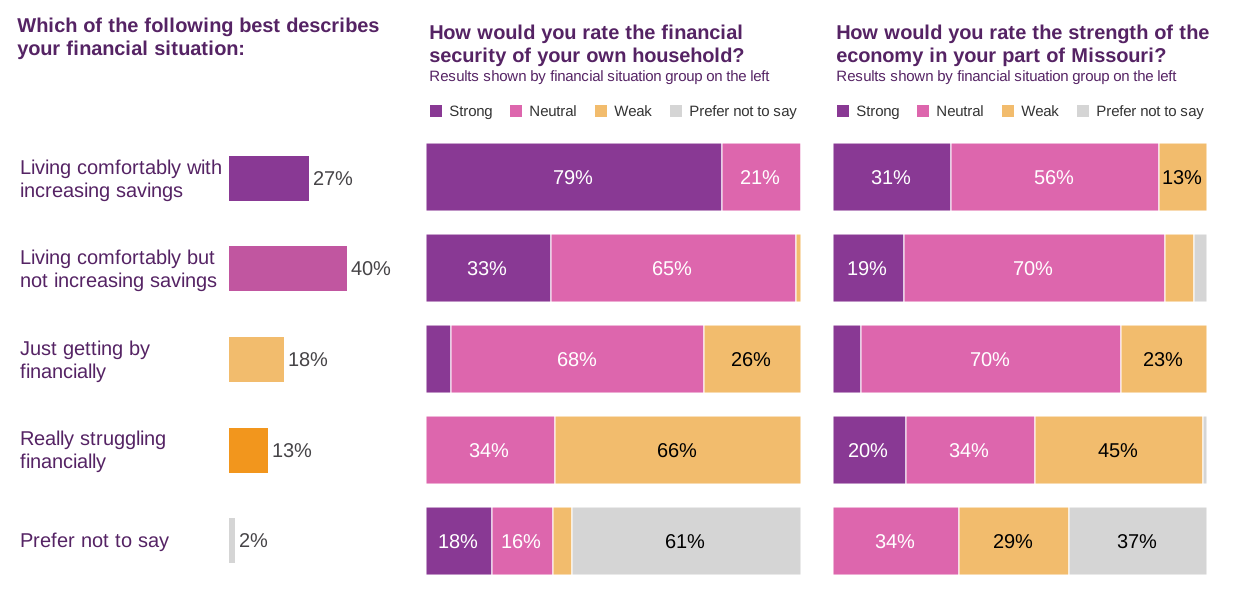
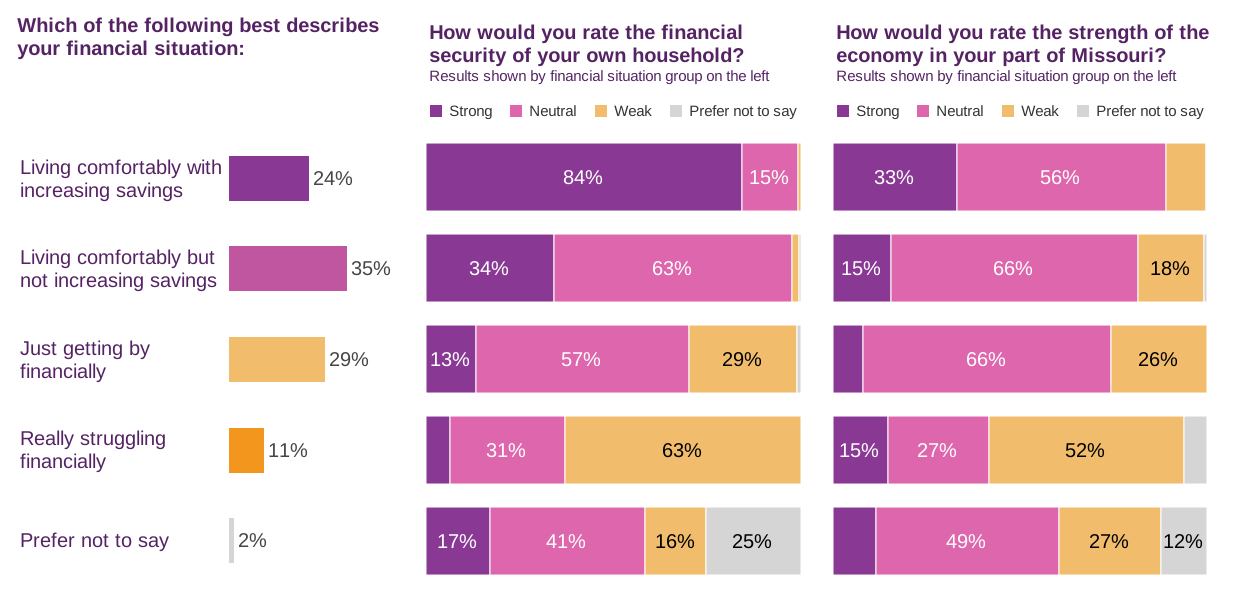
Urban residents are more likely than their rural peers to say they are living comfortably and increasing savings, which aligns with the lower income levels in rural areas. However, regardless of income, at relatively high rates, both rural and urban residents report feeling neutral or confident in their own households’ financial security.
Urban
Rural

Rural residents report struggling to access health care at a higher rate
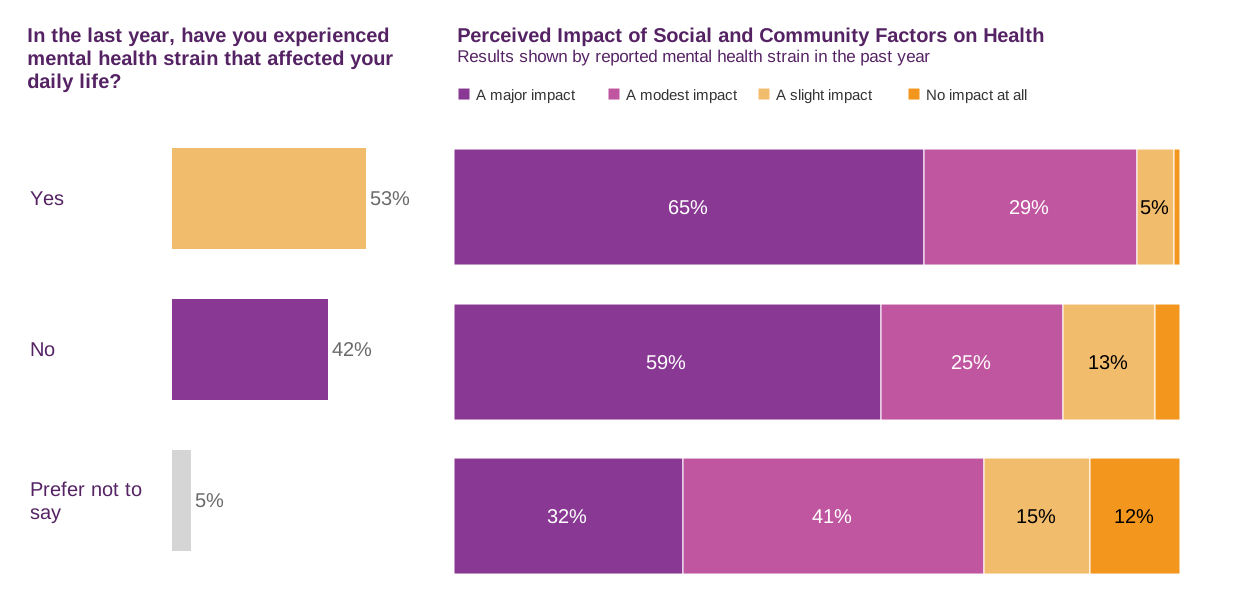
At similar rates, 32% of rural residents and 31% of urban residents report that they find it difficult to obtain care for their family’s physical health in their community. However, 52% of rural residents – compared to 44% of urban residents – find it difficult to obtain care for their family’s mental health. Rural residents were less likely than their urban peers to report that they had experienced mental health strain that affected their daily life, though, with 53% of rural residents compared to 56% of urban residents reporting this impact.
When I think about healthcare, that is freedom too because I might wake up tomorrow and need open heart surgery and I don’t have healthcare, I can’t go and borrow $2 million for a heart, so I just think it’s all connected.
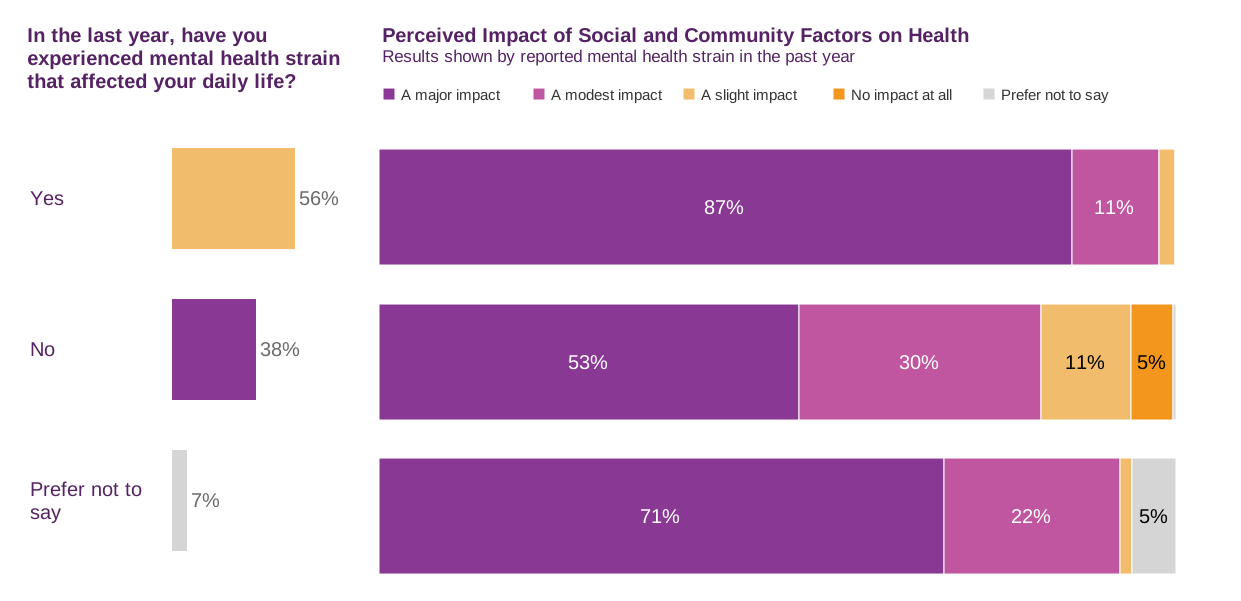
Finally, urban residents were much more likely to subscribe to the idea that factors in society and the community can impact a person’s health. Among residents of Missouri who had experienced mental health strain in the past year, 87% of urban residents and 65% of rural residents believed that social and community factors impact personal health.
Urban
Rural