© 2026 Missouri Foundation for Health
© 2026 Missouri Foundation for Health
by Tiffany Phillips, Senior Communications Strategist
In the United States, that includes 26% of adults. Disability crosses race, income, age, and geography. It can be visible or invisible. It can be temporary or lifelong. And at some point, most of us will experience it ourselves.
Yet many of the systems that shape our health – transportation, building design, participatory democracy, even telecommunications – were not originally designed with everyone in mind. When that happens, barriers are built in. Even when obstacles are not created on purpose, that doesn’t lessen their impact. Equity, by definition, requires listening to those most affected and working beside them to remove impediments to well-being and equalize access.
In 2023, the Foundation launched a redesigned website built with accessibility in mind. The update included improved text contrast, clearer navigation, mobile responsiveness, and compatibility with assistive technologies. The Foundation also incorporated live user testing of those with lived experience to better understand how people interact with the site in real time.
These improvements matter. Nationally, only 3% of websites are considered fully accessible. As more public information moves online, digital access becomes inseparable from civic participation and health.
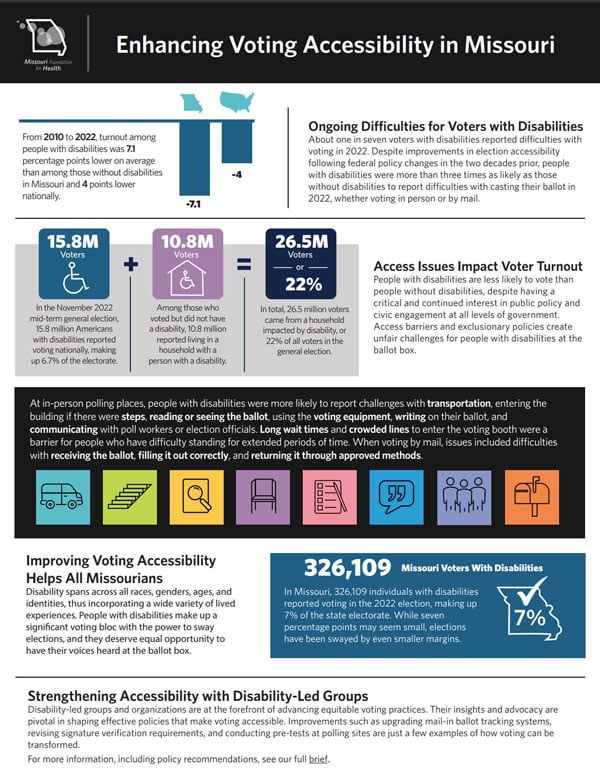
The following year, our Health Policy and Advocacy team released Enhancing Voting Accessibility in Missouri, outlining barriers voters with disabilities face and identifying practical steps to improve access statewide. Foundation staff worked with community partners and lawmakers to establish Disability Voting Rights Week (the second full week of September), developed in partnership with legislators and advocates to raise awareness and improve access to the ballot.
MFH signed the Disability Inclusion Pledge in 2025, joining other foundations committed to strengthening disability inclusion across our policies, grantmaking, and communications. The pledge recognizes that disability is not a side issue. It intersects poverty, race, aging, rural access, and chronic disease. Addressing ableism, both structural and cultural, is a critical part of addressing health inequities.
Since signing, staff has participated in trainings led by Disability & Philanthropy Forum members to better understand accessible communications, inclusive practices, and the ways philanthropy can unintentionally reinforce barriers.
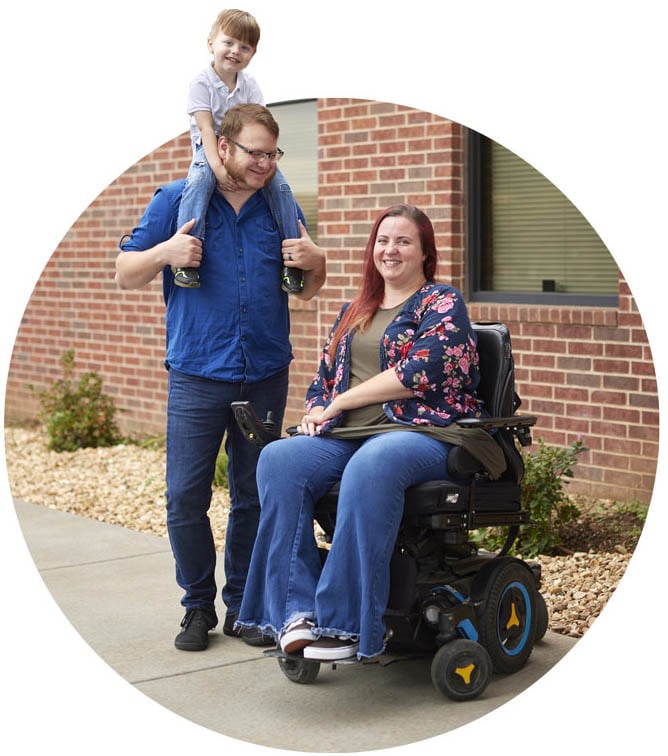
The goal is not perfection; it is progress and accountability.
Accessibility is ultimately about dignity. It asks a simple question: Who was considered when this system was built? Removing barriers for people with disabilities strengthens communities for everyone: parents with strollers, older adults, workers recovering from injury, and neighbors managing chronic conditions.
Access is not a special feature. It is part of building systems that work. And that is the kind of Missouri we are working toward; one where inclusion is expected, not optional.