by Tiffany Phillips, Senior Communications Strategist
However, Missourians’ relationships with guns are deep and personal. Even for those who have dedicated their lives to reducing suicide rates, some are hesitant to bring firearms into the conversation.
It took years of work for us and our partners, but we now see that it is possible to talk about how deadly guns can be during moments of mental distress. One thing has become clear during the process – trusted community members are the ones who must take the lead.
Our journey into this topic, and the lessons learned so far, were recently highlighted nationally in two different places.
A recent episode of the For Goodness Sakes podcast, featuring grantee Shelby County Cares and MFH staff, showcased how rural communities are working from within to reduce firearm suicides. The conversation explored the complexities of engaging rural communities in dialogue, overcoming stigma, and how trust is built.
The discussion reinforced a key truth: progress starts when communities and people with lived experience lead the way.
Pictured from left: Daniel Waxler, Senior Communications Strategist; Jessi LaRose, Director of Strategic Initiatives; Marcel Scaife, Senior Strategist-Initiatives; and Jolie Foreman, Executive Director of Shelby County Cares
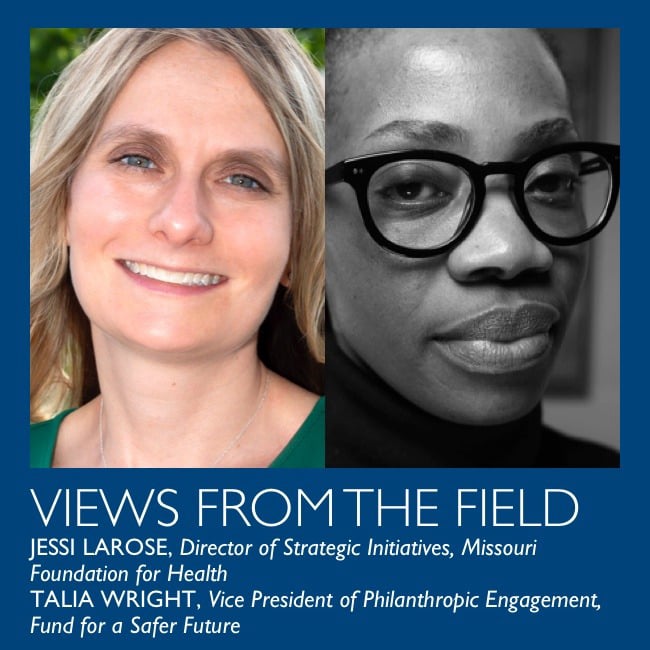
Additionally, our collaboration with national partner Fund for a Safer Future was featured in a recent article published by Grantmakers in Health. The piece, co-written by MFH Director of Strategic Initiatives Jessi LaRose, highlights how we’re contributing to a broader conversation about firearm suicide and learning from peer institutions nationally to ensure rural perspectives are included.
For many health funders, the question isn’t whether to engage in the work of preventing gun violence and death; it is about how to do so effectively, especially in politically complex environments. The answer increasingly lies in collaboration, both with community partners and with other funders facing similar challenges.
Firearm violence is a complex issue that can seem insurmountable. Advocates with varying viewpoints can agree that helping people stay safe, connected, and supported is key to finding solutions that work.