Rooted in Rural

New Growth & Heartland Food Business Coalition

Reconnecting neighbors, farmers, and communities, making local connections visible again.

New Growth logo

Organization: New Growth & Heartland Food Business Coalition
Location: West Central Missouri
Serving: The surrounding community through farmer connection and coordination, new market development, advocacy for small family farmers, and mentoring for emerging food enterprises.
Programs: Local Food Systems | Rural Economic Development | Farmers Market Access | Community Health

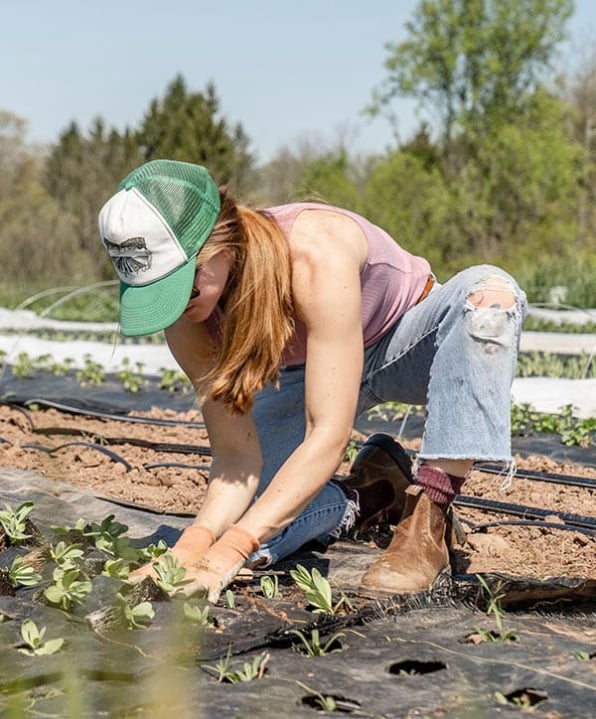
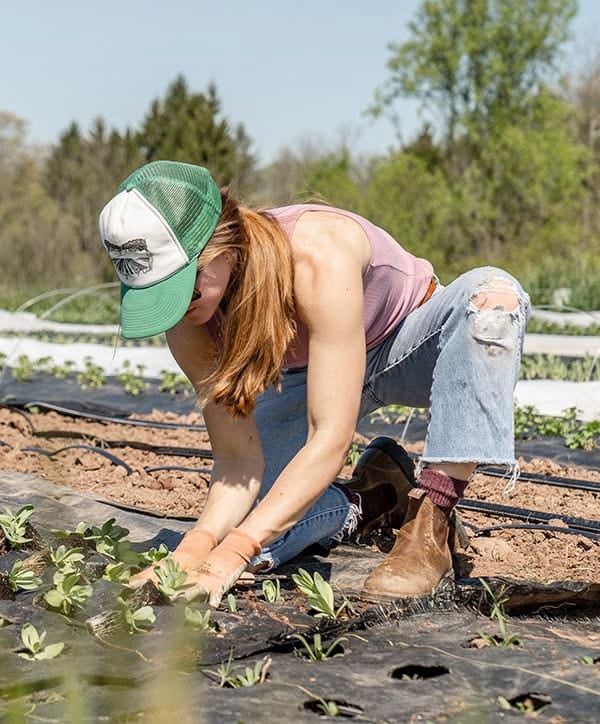
Young farmer tending to young crop seedlings in the field

Rebuilding Local Food Economies With Strong Relationships

In much of rural Missouri, there are long stretches of farmland rolling toward the horizon and big, leaning barns sitting along unpaved roads. Grocery stores in small towns carry packaged goods from far away, foods with long shelf lives but short on nutritional value. You might think that food should be abundant in places where agriculture is part of everyday life. But the people working in rural food systems know that the relationship between land, farmers, and the food on people’s tables is far more complicated.

New Growth is a community development corporation based in west central Missouri dedicated to helping rural communities thrive by supporting entrepreneurs, small businesses, farmers, and food enterprises with the tools they need to grow.   

“I’ve learned that neighborhoods and relationships and small businesses are an essential part of health across all levels.”  

- Patty Cantrell, New Growth’s Outreach and Development Director

Food, in this way of thinking, is not simply nutrition. It is infrastructure. It is the economy and the culture. Those connections, however, have become increasingly difficult to see.

New Growth approaches food systems as a mycelium-like network of relationships that must be rebuilt piece by piece, making invisible systems visible again. Their work helps small-scale growers who often face steep logistical barriers with transportation, processing facilities, regulations, and finding buyers in regions where grocery chains dominate retail space. New Growth works to remove those barriers by strengthening local markets, supporting farmers markets, and helping producers navigate the economic realities of selling locally grown food. Their goals are to increase food availability, ensure that farmers can earn a livelihood and reconnect food to conversations about health and local economy. 

New Growth, the Background

Over the past several decades, rural communities across the Midwest have experienced profound shifts in how food moves through their regions. Farms still exist, sometimes in greater scale than ever before, but the systems that connect farmers to nearby consumers have thinned or disappeared entirely along with the feasibility of making a living from the land.

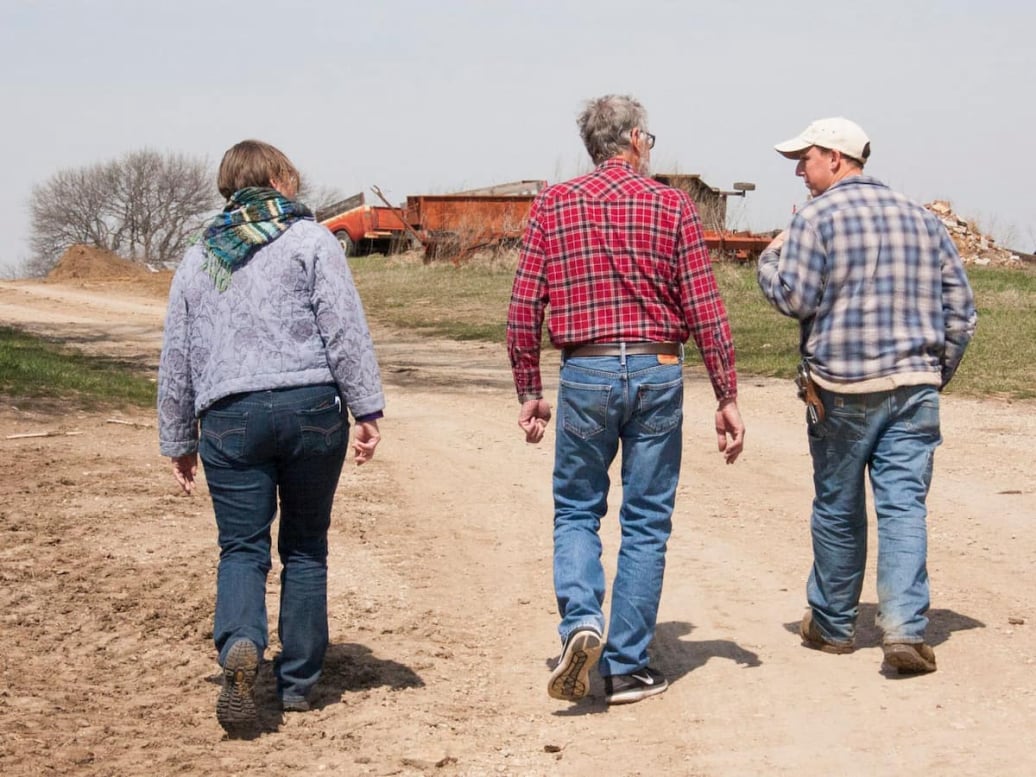
Three people walking on a dirt farm road, learning about how to become farmers

Conversations about food tend to focus on food insecurity or poverty. There are a lot of food pantries, and they end up playing a huge role in getting food to people. Emergency food systems, while important in moments of need, were never designed to rebuild local economies or restore relationships between farmers and their communities. People working through New Growth are focused on building the food, farm, and local connections that generate new and needed choices and resilience. 

They talk about being part of a foodshed, which the Foodshed Alliance describes as “the geographic area that produces the food for a specific population, mapping the journey from farm to consumer. Similar to a watershed, it includes production, transportation, processing, and retail, aiming to enhance local food security, sustainability, and transparency in food systems.”
Rondle Dines, director of the women’s business center at New Growth Women’s Business Center and longtime resident of west central Missouri, says “People go to the grocery store and don’t recognize that it all originates from a farm and this paradox is striking in agricultural states.”

“Farms surround many of these communities, yet the food system that residents rely on rarely involves the farmers who live nearby.” 

- Rondle Dines, Director of the New Growth Women’s Business Center

Collective Impact

The results of New Growth’s approach are often subtle at first. Farmers gain new markets. Local markets attract more vendors. Residents discover food grown just a few miles away. Over time, those small shifts begin to accumulate into something more significant. A local food system begins to reappear. Farmers who once struggled to find buyers build stable relationships with nearby communities. Rural towns that had grown accustomed to importing nearly all their food begin to see the value of supporting producers in their own regions. Conversations about food shift from scarcity to possibility. In practical terms, this means that more dollars circulate locally rather than leaving the region through distant supply chains.

It also means that communities regain a measure of control over how their food is produced, distributed, and consumed. But the organization’s leaders often describe the deeper impact in social rather than economic terms because food systems, after all, are fundamentally about relationships. When farmers sell directly to their neighbors, or wholesale to school districts in the region; when people begin to care about the people and places behind their food, a different kind of community infrastructure takes shape. It is slower than the industrial system that currently dominates the American food landscape. It is often messier in practice, yet it carries the almost universal feeling of durability and genuine personality that large centralized systems lack. 

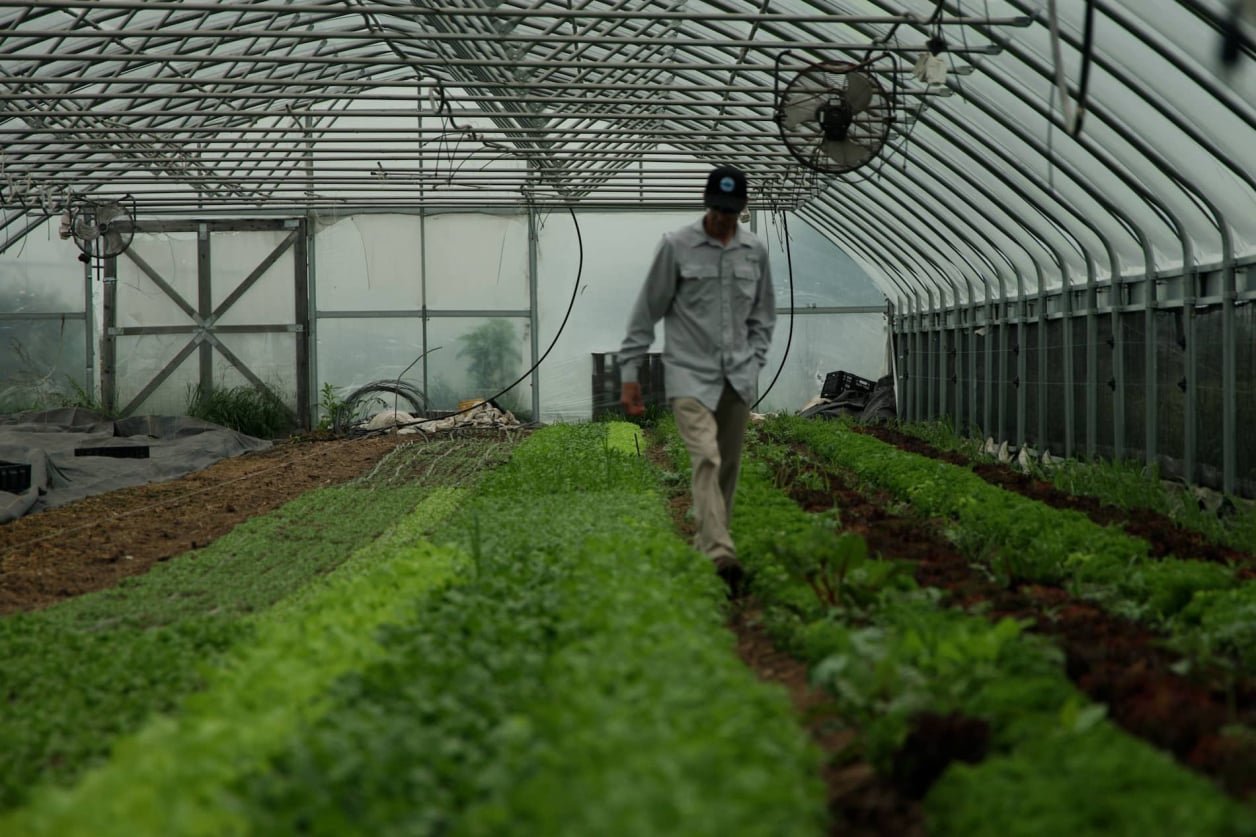
Farmer walking among rows in a greenhouse

For the team at New Growth, the long-term vision is not simply to repair existing systems but to reshape how rural communities think about food altogether. Instead of seeing food as a commodity that somehow makes it to local stores, they hope to restore the sense that food is something grown, shared, and sustained within and among communities themselves. The work unfolds gradually across Missouri’s rural landscape, moving from town to town and farmer to farmer and region to region. Each new relationship strengthens the network of foodsheds a little more. 

The people involved often return to the same observation that has guided the organization from the beginning: food has always been a bridge between people. And when that bridge is rebuilt, the effects reach far beyond the dinner table, touching local economies, community health, and the simple sense that rural and urban places can still shape their own futures.

New Growth Logo


Dig In
➔ Donate
➔ Get Newsletter
➔ Begin Farming
➔ Farm to Fork

Explore
➔ Website
➔ Blog
➔ YouTube
➔ Facebook
➔ Instagram
➔ X
➔ LinkedIn  

CHANGEMAKING NOW

Fall 2026