


Breaking Cycles, Building Futures
How the Missouri State Public Defender’s office and ArchCity Defenders are using a new model that pairs legal defense with support for health, housing, and stability.
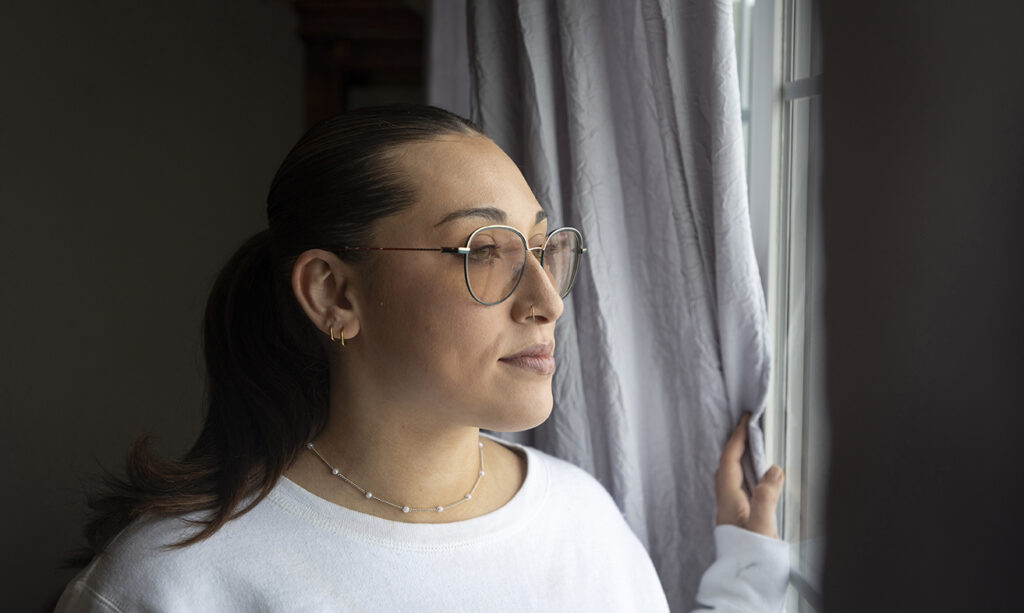
Aidan Bailey is back on her feet and thriving after more than 15 years of drug and alcohol use and a drug charge several years ago.
She now works full time as an assistant for the Hutson Law Firm in Lebanon. She started there in May 2024.
She has a car. She’s in a healthy relationship. And she teaches a weekly class in a cognitive behavioral treatment program called Moral Reconation Therapy for federal treatment court participants and other people who have been involved in the legal system.
Bailey credits the Missouri State Public Defender’s Holistic Defense Services Program for helping turn her life around.
When she was 11, she fell in “with the wrong crowd” and started using alcohol and marijuana. Then, methamphetamine and heroin at age 14. As an adult, she was arrested on a drug charge and spent 120 days in prison treatment in 2019 and 2020 in lieu of sentencing in Laclede County.
Bailey is now 29 and has four children. She entered the holistic program in late 2022. She had lost custody of her children before she started the program but regained custody after she finished it.
Her journey has been long and difficult. But she said that now “I’m doing fantastic.” The holistic program’s team advocated with a judge on her behalf, found a rental house for her and helped her get a job, cab vouchers, and a mobile phone. They also helped her set up a payment plan on a past-due electric bill.
“I’ve been in five different inpatient facilities, county jail more times than I can even count, outpatient facilities, sober-living homes, transitional homes for women and one – out of everything that I named – one program worked for me. And that was treatment court and everything that follows,” she said.
“So just because you fall down today, doesn’t mean that you cannot stand back up and get back to it tomorrow. Surrender, surrender, surrender. Everything you thought you knew, it’s all wrong.”

Birth of Missouri’s holistic program
The holistic program isn’t just a benefit to Missourians like Bailey who are hoping to turn their lives around after brushes with the law. It’s also a boon to taxpayers, according to a program evaluation shared with Missouri lawmakers this year.
A Florida-based research firm, Wellbeing & Equity Innovations, found that over an 18-month period, holistic programs in seven public defender offices across the state saved the state an estimated $15.6 million.
That includes reducing the duration of pretrial incarceration by more than 4,500 days, which saved $354,750. It also reduced the sentences of individuals involved with the legal system by an average of four to six years, a savings of $15.1 million.
“As other studies across the country have shown, when you factor in the savings that comes from reducing the lengths of pretrial detention and the imposition and length of prison sentences, as well as the costs that are saved when people are doing well and working, paying taxes and keeping their kids out of foster care, this model actually funds itself and results in a net savings for taxpayers,” said Annie Legomsky, a lawyer with the public defender’s office and the holistic program’s leader since its inception.
If inquiries from outside the state are any indication, Missouri’s holistic defense program is among the country’s biggest, Legomsky said. But it’s still relatively new.
The public defender’s office started its holistic program in April 2022 with oversight from Director Mary Fox after a couple of years of study.
Legomsky said its purpose is to help clients get back on their feet, turn their lives around and never return to the legal system. The program represents people who have committed low-level offenses such as trespassing or shoplifting as well as more serious offenses such as sex crimes, assaults, robberies or homicides. Obviously, finding resources to help those accused of the more serious offenses can be difficult.
The program works to reduce interconnected social challenges by:
- creating pathways for people to rebuild stability after legal involvement
- supporting families to stay whole and connected
- easing demands on judicial, correctional, and social service systems
- reducing the high public costs of incarceration
- strengthening the cohesion of communities
Legomsky said the program functions largely in two areas: case management and mitigation advocacy.
Case management connects clients to needed resources. This includes people who face charges or have been accused of crimes but haven’t been convicted and those who have violated probation and are facing a revocation hearing that could result in a prison sentence. Mitigation advocacy involves working with prosecutors and judges to find alternatives to standard sentencing for people involved with the legal system.
The team creates plans for its clients to: find housing, which is key to stability; get a range of mental health or substance use treatment or both; get their IDs back when exiting jail so they can get an apartment or a new job; apply or reapply for disability benefits if needed; and apply for Medicaid.
“They all talk about clients who have terrible charges, terrible criminal history, who’ve been given lots of chances, and they think there’s no way we’re going to get probation ever in this case. And then through this amazing collaborative advocacy. … We’ve had judges reach out to us and say, ‘You know, I was a law-and-order judge for a long time, and I believed in prison and punishment. And my perspective has changed, and I really believe in treatment and resources now.’”
Annie Legomsky, Missouri holistic defense services leader
Team members are physically based in 20 of the public defender’s 32 statewide outposts. Some of them cover multiple offices in a region. The program started with Legomsky as the sole employee until August 2022. It then gradually added staff. Now it has nearly 30 people, 22 of whom do direct client work. In addition to Legomsky, a lawyer, there are social workers, recent college graduates, legal assistants, and investigators.
Most of the program’s work is funded through grants from Missouri Foundation for Health, as well as AmeriCorps, and through a contract with Partners for Justice, a national nonprofit that specializes in working with public defenders to start holistic programs.
However, the AmeriCorps Holistic Advocate program was recently terminated by the Department of Government Efficiency (DOGE), resulting in a loss of about $105,000 in funding to the program, Legomsky said.
The team advocates for clients by supporting individual public defenders, fostering collaboration with community partners, and educating people inside and outside the legal system about the program and the barriers their clients face.
People in the legal system often see the program’s clients “as a case number, as what they’re charged with and what their prior criminal history is,” Legomsky said.
“You go to sentencing hearings and that is what the judges and prosecutors have on their mind,” she said. “And those are important facts for them to consider; they have to consider those. But there’s so much more to it than that.”
Getting needed resources for the program’s clients “is so essential for them but very difficult,” Legomsky said. The team often succeeds in finding those resources, but “it takes a lot of navigation between advocates, service providers, attorneys, the judge and prosecutor to make sure everyone’s on board.”
A former prosecutor’s take on holistic defense
Yet the program is winning over some key participants in the legal system.
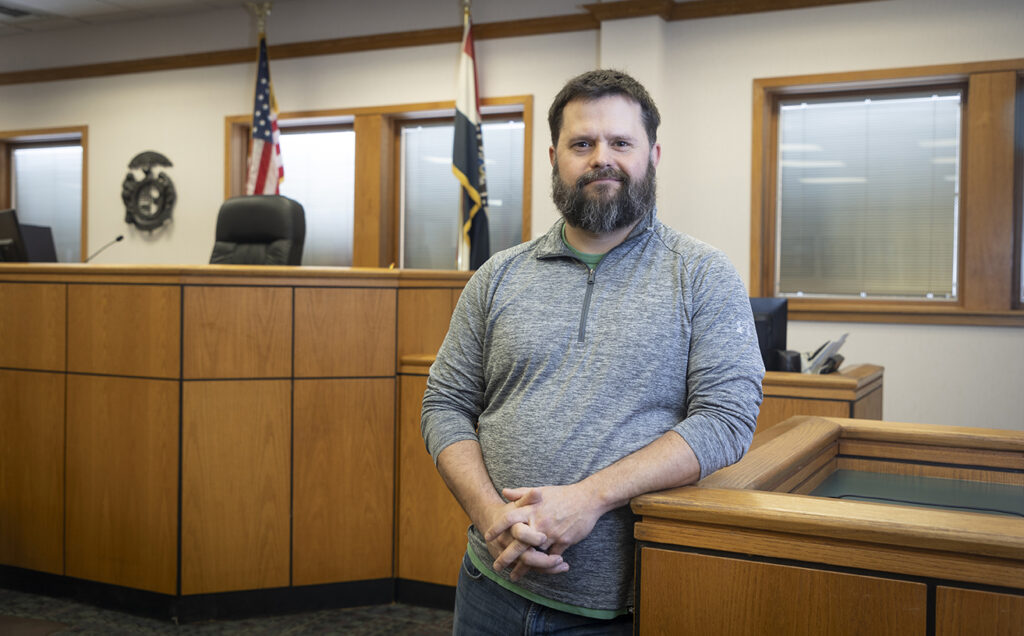
Brendon Fox became familiar with Missouri’s holistic program when he was an assistant prosecutor in Phelps County for four years and then the elected Phelps County prosecutor for nearly 10 years. Late last year, Fox became the Division 2 circuit judge for the 25th Judicial Circuit in Rolla, which comprises Phelps, Pulaski, Maries, and Texas counties.
Fox said he hasn’t seen the holistic approach used on many cases since becoming a judge, but he values it like he did as a prosecutor.
“I try to be pragmatic,” he said. “The criminal justice system right now, I think it has kind of been turned into almost the junk drawer for society. What I mean by that is, as a prosecutor or judge, punishment-wise, you can incarcerate, fine or, in capital cases, you can kill somebody. Those are really the only the things you can do. With probation, it’s the suspension of one of those as an alternative to try to rehabilitate and collect restitution.”
Legomsky said the program offers a welcome alternative for lawyers and judges who’ve lost faith in the system’s ability to rehabilitate people.
She has been surprised by some lawyers and judges who had thought a positive outcome in certain cases was impossible. But when the holistic team’s members got involved with advocacy, mitigation or both, “they completely changed everyone’s minds.”
“They all talk about clients who have terrible charges, terrible criminal history, who’ve been given lots of chances, and they think there’s no way we’re going to get probation ever in this case,” she said. “And then through this amazing collaborative advocacy. … We’ve had judges reach out to us and say, ‘You know, I was a law-and-order judge for a long time, and I believed in prison and punishment. And my perspective has changed, and I really believe in treatment and resources now.’”
For at least the past 40 years, some aspects of society’s lack of well-being have been pushed onto the legal system, Fox said. But “you can’t fine or incarcerate away” problems with drug addiction, mental health, and the need for guardians and conservators.
‘Tough on crime’ instincts persist
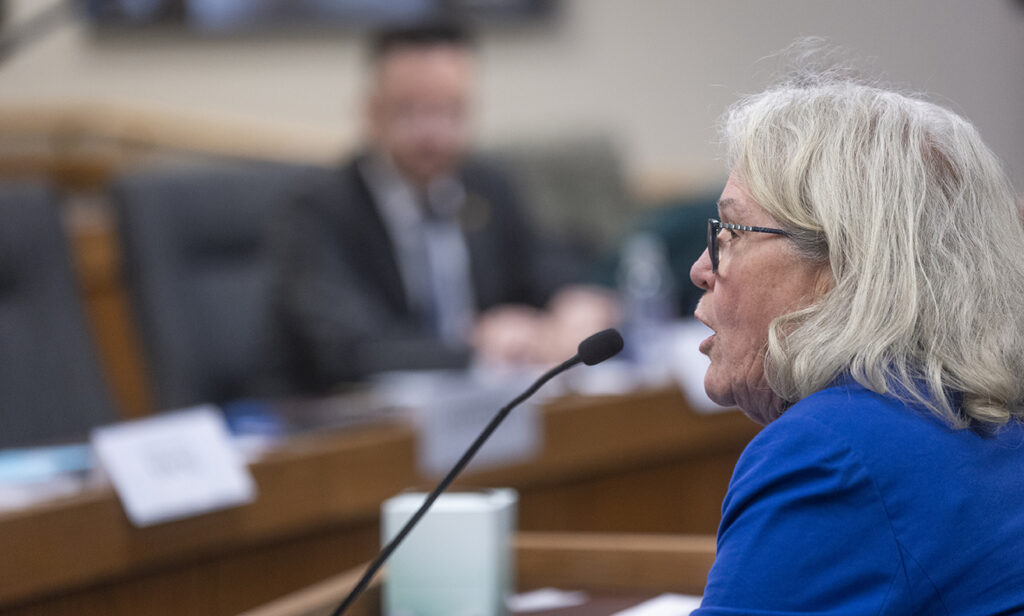
But the instinct to mete out punishment runs deep when it comes to legal matters in Missouri and elsewhere, particularly in the most publicized cases, an attitude underscored by a recent controversy involving the public defender’s office before the General Assembly.
Missouri lawmakers threatened to hold up the public defense system budget until administrative assistant David Spears was fired. He had pleaded guilty to two felonies in 2012 related to a 2007 case involving the rape and murder of his stepdaughter, Rowan Ford. Lawmakers objected to him receiving a taxpayer-funded salary and benefits, with House leaders calling it a “lapse in judgment that undermines public trust in our institutions.”
“You get elected to those positions by saying, ‘We’re going to be tough on crime. We’re going to put more cops on the street. We’re going to build more prisons.’ And I think it’s kind of a general societal aversion to the concept of rehabilitation in the United States. Everybody loves a good underdog story. It’s just, they only like them when they’re crossing the finish line. They don’t necessarily get as involved whenever they’re in the weeds, so to speak.”
Brendon Fox, Division 2 circuit judge for the 25th Judicial Circuit in Rolla and a former prosecutor
Mary Fox, the agency’s director, initially defended the man’s employment in a contentious budget hearing, citing a recent push to emphasize second chances in state government for those with criminal histories. But Spears’ employment with the agency ultimately ended, and House lawmakers cleared the way for the agency’s budget to move forward with nearly $1.2 million to hire 20 new holistic defense social workers.
The barriers to holistic defense are usually much less dramatic.
Brendon Fox said prosecutors have limited time and feel overwhelmed by their caseloads. So they’re interested in viable options for some cases. Still, there are plenty of them who adhere to a philosophy of “don’t do the crime if you can’t do the time.”
“I get that approach,” Fox said. “When I was a prosecutor, there were certainly people that needed to be locked up and segregated from society.”
Most, though, have issues that can and should be addressed.
He thinks the holistic program’s biggest obstacle is “that nobody gets elected to Congress or the Senate or the presidency by saying, ‘You know, we should thoughtfully reconsider why we do what we do, where we spend our money and try to figure out a better way to help people.’”
“You get elected to those positions by saying, ‘We’re going to be tough on crime. We’re going to put more cops on the street. We’re going to build more prisons.’ And I think it’s kind of a general societal aversion to the concept of rehabilitation in the United States. Everybody loves a good underdog story. It’s just, they only like them when they’re crossing the finish line. They don’t necessarily get as involved whenever they’re in the weeds, so to speak.”
Spurring change
Still, advocates for holistic criminal-defense programs are at times forcing the issue in the system.
Jacki Langum, deputy executive director of the St. Louis-based ArchCity Defenders, said her organization practices what they call holistic legal advocacy, similar to what the public defender’s holistic program does. ArchCity was started in 2008 and 2009 by three St. Louis University law school graduates. They modeled the program on The Bronx Defenders in New York City, a nonprofit public defender that uses a holistic defense services approach.
About 30 anonymous donors have funded ArchCity, Langum said. Initially the city of St. Louis gave the organization a grant to provide legal representation. The St. Patrick Center and the Lutheran Foundation also gave the organization grants.
ArchCity has spurred some changes in the court system, Langum said. For example, municipal courts would sometimes issue arrest warrants for defendants who failed to appear in court for minor offenses such as traffic violations or sleeping on private property.
“They would get a new court date or do community service, which was difficult if they had no place to live,” Langum said. “They would end up with so many fees and failure to appear because of fear of jail and additional fines.”
They would then encounter police in St. Louis or one of its many suburbs and then do the “municipal court shuffle,” she said. This involved going to jail in several municipalities until judges released them or they could post bond. She called it “modern day debtors’ prisons.”
Defendants often faced “horrible jail conditions,” she said, noting instances where a few of those who were jailed committed suicide.
“They couldn’t afford to buy their freedom,” Langum said.
ArchCity sued municipalities starting in 2015, an effort to end such practices that continued for nine years. The work was largely successful, resulting in settlements, legislative changes and favorable appellate court rulings.
ArchCity’s clients face generational poverty, trauma and systemic racism, Langum said.
“We do what we can to help them overcome that, but that’s why we’re also doing the community, politica,l and media advocacy we do so we can impact their daily living conditions beyond their individual cases,” she said. “It’s difficult.”

The Stakes Are High
Even with successes, the barriers to the holistic approach can pile up. Implementing it requires changes to the public defender system itself, Legomsky said.
Typically, a public defender runs a trial office and hires lawyers, investigators, and legal assistants. But in a holistic program, team members, including social workers, are trained and supervised more collaboratively. She and her team are trying to change the agency’s culture toward a holistic approach.
“You can pretty easily get probation for someone who’s charged with drug possession and has no prior convictions,” she said. “That can happen anywhere in the state. But if we haven’t asked our client if they need resources for substance abuse, poverty, or mental illness, that client’s going to be back here.
“Mental health is a huge, huge issue. There’s a huge gap in resources. … We really think the answer is we have to really help clients the first time so they don’t come back a second time.”
A confluence of problems can be difficult to unravel however. As part of mitigation advocacy, getting clients released on bond is a “huge common need,” Legomsky said. A judge and prosecutor might foresee problems at a bond hearing. These often include a lack of housing and sometimes untreated mental illness or substance use.
If a home plan can be offered – and if the defendant poses no threat to the community – a release might be in the offing.
Finding housing for clients is often difficult, Legomsky said. Some parts of the state have no or few homeless shelters, or small ones with five beds for single men only. Clients sometimes have no family support where they live.
In many cases, there aren’t enough service providers to meet the needs of clients, or those who do have a six-month waiting list. Some organizations require that a client be out of jail.
Missouri’s incarceration rate last year was 785 individuals per 100,000 residents, according to the Missouri Independent. That works out to about 41,000 people behind bars. The state spends more than $700 million annually on its prisons. County and municipal lockups spend millions more.
Those numbers by themselves provide an incentive to creatively approach how offenders can be held accountable for their wrongdoing at less cost, particularly if it provides better outcomes.
For individuals moving through the legal system though, the stakes can be immeasurable.
“The consequences of criminal conviction – it is catastrophic,” Brendon Fox said. “If a person gets a felony conviction, the likelihood of them finding good, gainful employment … goes down significantly. That kind of spirals people into that cycle of recidivism. And so if there’s a way to fix the person, then you don’t have to worry about them doing crime anymore.”

This story was produced through the Missouri Solutions Spotlight project, which receives funding from Missouri Foundation for Health. Articles for this project were developed by regional journalists working independently of the Foundation and supported by the staff of The Journal, a solutions-oriented nonprofit news outlet based at the Kansas Leadership Center. The Foundation had no editorial involvement, including no control over the selection, focus of stories or the editing process of Missouri Solutions Spotlight. Funders also do not review stories before publication.
You can view the original stories here. Slight modifications were made to this story by Missouri Foundation for Health to ensure alignment with brand standards.