



In our latest blog, we explore how rising health care costs are shaping decisions at kitchen tables and in the Capitol. Speak Up MO offers a clear view into what Missourians are experiencing and what they believe is needed for health. As key policy decisions take shape, it’s critical that leaders listen to ensure solutions reflect the realities people are living every day.
Every Missourian should be able to schedule a check-up, fill a prescription, or take their child to counseling without wondering how they will afford it. Health care should not force a family to choose between paying the gas bill and seeing a doctor. Yet, across the state, that’s the calculation far too many households are making.
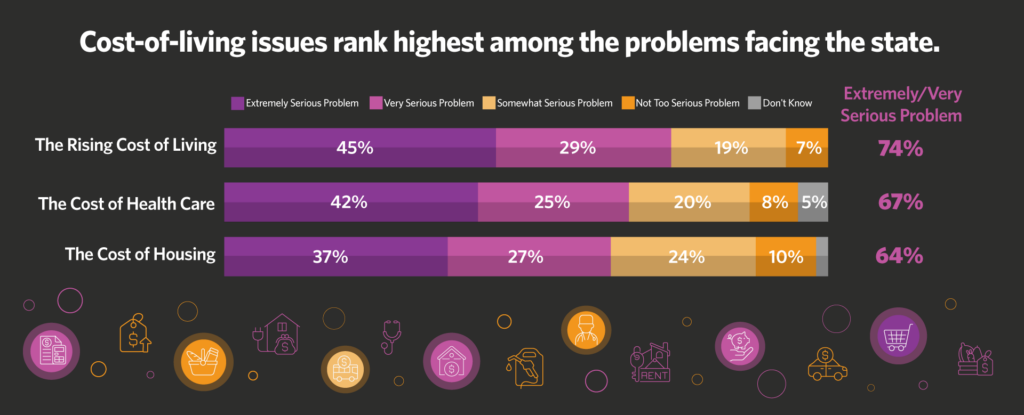
In our 2025 Speak Up MO poll, cost of living ranked as the most serious problem facing the state, with 74% of respondents calling it an “extremely” or “very serious” issue. The cost of health care came in second, with 67% of respondents rating it as “extremely” or “very serious.” Additionally, one in four Missourians also reported that they or someone in their household went without health insurance at some point between July 2024 and July 2025, and that was before the Affordable Care Act subsidies (ACA) expired at the end of last year.
At the same time, two-thirds of Missourians say it is “easy” to obtain physical health care in their community. That finding may sound reassuring, but it comes with an important caveat. Many residents describe care as available yet expensive, a distinction that matters when household budgets are already stretched thin.
The impact of rising health care costs is already visible across Missouri. Reporting from The Beacon shows that after enhanced federal premium tax credits expired at the end of 2025, enrollment fell 12%, with nearly 51,000 Missourians dropping off Affordable Care Act (ACA) marketplace coverage during early 2026 enrollment.
For some families, premiums more than doubled without those enhanced subsidies. When coverage becomes unaffordable, families often respond by downgrading plans, delaying care, or going uninsured altogether. These decisions can have lasting consequences for both health and financial stability.
The Beacon also reported that premiums and deductibles for employer coverage in Missouri and Kansas continue to climb. In 2024, premiums and deductibles consumed 9.6% of a family’s household income in Missouri. Health policy experts often consider families spending more than 5% of annual income on health insurance deductibles to be underinsured.
Some of what we’re seeing in Missouri mirrors national concerns. A KFF Health Tracking Poll found broad concern about rising health care costs, with two-thirds of the public saying they worry about paying for health care. There is also strong support for extending the ACA’s enhanced premium tax credits, with 67% saying Congress did the “wrong thing” by allowing them to expire.
These pressures mount as lawmakers in Jefferson City weigh bills that will shape the state’s health care landscape in the years ahead. These policy conversations will decide whether health care becomes more accessible and affordable or more uncertain and costly for families across the state.
What Missourians are asking for is simple. They want coverage they can afford to use, and policymakers who listen to them on their concerns about rising costs.
As state and national leaders consider the next round of health policy decisions, the measure of success should be straightforward: Are more Missourians able to get and keep the care they need without skipping appointments, rationing prescriptions, or falling into medical debt? When the answer is yes, our communities are healthier, more stable, and better positioned to thrive.